

Tick-borne Diseases Are on the Rise in Summer: How to Protect Against Them
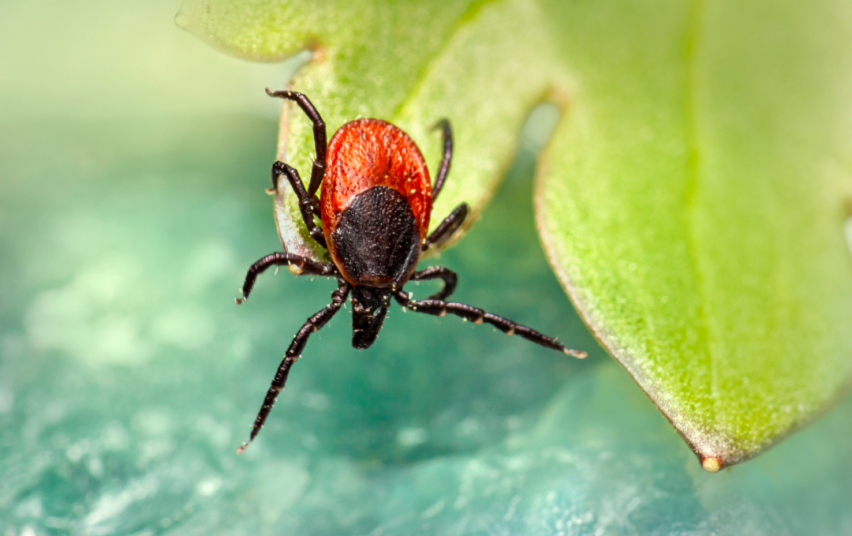
Although cases of tick-borne diseases occur throughout the year, warm season greatly increases the risk of tick-borne illnesses. This trend prevails every year, and this year is no exception. As summer approaches and people spend more and more time outdoors, the number of cases of tick-borne diseases in the country increases. Specialists of the National Public Health Centre (NPHC) warn everybody to be cautious, to take measures that help prevent ticks and to wear appropriate clothing. The most effective protection against tick-borne diseases such as encephalitis, however, is vaccination.
Therefore, if you haven't had time to do it, do not delay. Vaccination is available all year round. In January-April, 2 cases of tick-borne encephalitis per month are reported on average.
This year, 31 cases were reported in May and 59 in June. The distribution of Lyme disease cases is similar. Although the number of Lyme cases is much higher compared to tick-borne encephalitis, the same trend of fewer cases in January -April is observed (an average 76 cases per month). In May and June 199 and 288 cases respectively were reported in the country.
This year so far, a total of 99 cases of tick-borne encephalitis and 792 cases of Lyme disease were reported in Lithuania. The numbers cannot be compared with last year's data yet, as the year is only halfway through.
In 2022, 377 cases of tick-borne encephalitis were reported (incidence rate was 13.3 cases /100,000 population), in 2021 – 365 cases (incidence rate was 13.1 cases /100,000 population). As for Lyme disease, 2380 cases (84.0 cases / 100,000 population) and 1780 cases (63.7 cases /100,000 population) were reported in 2022 and 2021 respectively.
Specialists warn that ticks are found throughout the country, in rural and urban areas. They are attracted by moist and shady environments, hence they can be found mostly in deciduous forests, dense brushwood: raspberry, alder, nut groves, young forest, parks with lush grass, and also at the edges of forest paths.
Therefore, those who enjoy mushroom and berry picking or otherwise spending time in nature in summer are recommended to be especially careful - choose light clothing that covers as much of the body as possible, so that it is easier to spot a crawling tick, use repellents, and after returning from the forest, carefully inspect the whole body.
If you notice a tick that has been sucked in, remove it immediately. Grasp it as close to the skin as possible and pull it up with a sudden movement, then disinfect the tick-bite area. If in 7-14 days (the longest after 30 days) symptoms such as headache, temperature, weakness, nausea, and chills manifest, these may be signs of tick-borne encephalitis. The symptoms of Lyme disease are as follows: in 1-4 weeks a red spot appears at the tick-bite site, joints and muscles may ache, sometimes the central nervous system, sleep, and memory are affected, you may feel dizziness. In all these cases, it is necessary to consult a doctor immediately.
NPHC specialists remind that the most effective protection against tick-borne encephalitis is vaccination, and vaccination against this disease can be done all year round. Children over one year can be vaccinated. To get the vaccine you should contact your family doctor. There are no vaccines against Lyme disease, hence remember to apply personal protection strategies mentioned above.