

NPHC: Ticks Become Hungry in Autumn Again
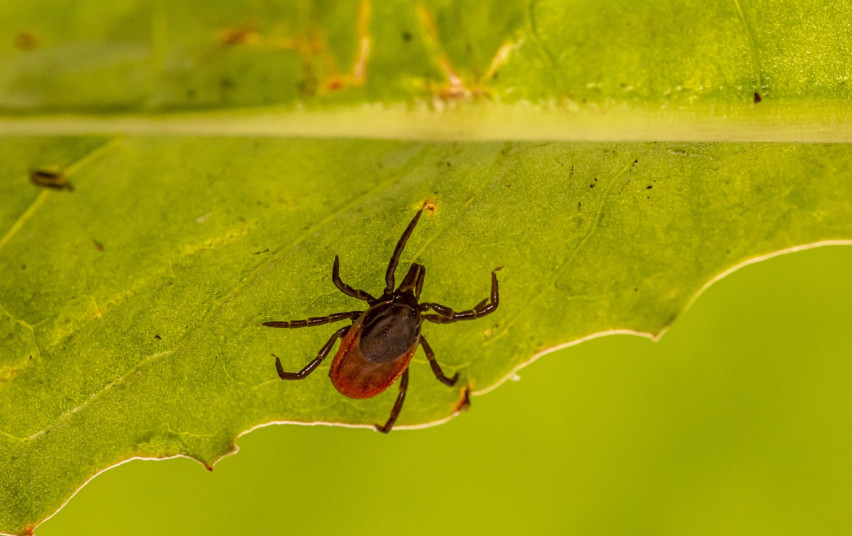
Specialists of the National Public Health Centre (NPHC) point out that the season of tick activity continues in the autumn, as ticks that fed in the spring have entered the stage of maturity and they need to feed again. Therefore, when enjoying the nature in autumn and looking for mushrooms in the forest, it is important to know how to protect against the bloodsucking arachnids capable of spreading dangerous diseases.
As Milda Žygutienė, chief specialist of NPHC Department for Communicable Disease Management says, ticks are dangerous because they transmit diseases such as tick-borne encephalitis and Lyme disease. Tick-borne encephalitis is extremely insidious as it can cause severe adverse events. Tick-borne encephalitis begins with fever, headache, weakness, chills, nausea, and sometimes diarrhea. These symptoms usually appear 7-14 days after infection but the condition of health should be monitored for 30 days. After a while there is usually a second wave of the disease, which is characterized by high temperature. The virus affects the brain and causes inflammation in the brain.
In the case of Lyme disease, a pink spot appears at the site of the tick bite after 1-4 weeks, which can change its shape and size. Joints and muscles may ache, sometimes the central nervous system is affected, sleep, memory, dizziness, etc. are disturbed.
People get infected all year round
Tick-borne encephalitis and Lyme disease are endemic in Lithuania. Infected ticks can be found throughout the country. The most suitable environment for ticks is deciduous and mixed forests, which prevail in central Lithuania, but they can also be found in pine forests, city parks, gardens or green areas. "Ticks are commonly found among tall grass and low-lying vegetation. They crawl up plants up to 1-1,5 meters above the ground and cling to our clothes as we pass by. Then they get on the body and look for a right place to suck in", – explains Milda Žygutienė.
According to the data obtained by NPHC, 291 cases of tick-borne encephalitis and 1714 cases of Lyme disease have been reported in Lithuania this year (January-August). Last year, over the same period, fewer tick-borne diseases were reported – 266 cases of tick-borne encephalitis and 1,325 cases of Lyme disease.
Vaccination is the most reliable protection
Tick-borne encephalitis virus is transmitted mainly by tick bites, but humans can acquire infection through consuming unpasteurized milk from infected animals. Vaccination is an effective way to protect against this dangerous disease. "Those who want to get vaccinated for the first time and gain immunity will need three doses of tick-borne encephalitis vaccine, injected in the prescribed order. Afterwards, in order to strengthen immunity a booster dose is suggested every 3-5 years depending on age ", – says the NPHC representative.
Currently in Lithuania, vaccination against tick-borne encephalitis is not free of charge both for children and adults. Children over one year old and adults can be vaccinated against tick-borne encephalitis.
How to protect against tick-borne diseases?
The best way to prevent TBE is to protect yourself from tick bites. "When enjoying outdoor activities, choose the right clothes - wear light-colored clothes with long sleeves, as this will make it easier to spot a crawling tick. Wrap your head with a scarf or put on a well-fitting hat or hood. Also use repellents, i.e. chemicals intended for protection specifically against ticks. After returning home, inspect your entire body, especially behind your ears, on the neck, armpits, groin, and the bends of your legs or arms, as ticks usually suck on these areas. Take a shower, comb your hair. When you spot a tick that has been sucked in, remove it as quickly as possible with tweezers if available. Pull it upward with a sudden and steady motion", – Milda Žygutienė shares her advice.
Last updated: 15-09-2023
Related news:
The Second Peak of Tick Activity Begins in Autumn
NPHC: Don’t forget about tetanus protection when working outdoors
Preserving Season Is in Full Swing: NPHC Warns of the Hidden Risk of Botulism
The Start of the School Year Is the Right Time to Check Your Child’s Vaccinations
On World Mosquito Day, NPHC Reminds Travellers to Protect Themselves Against Mosquito Bites