

Influenza Cases Remain High: Prevention Is Key
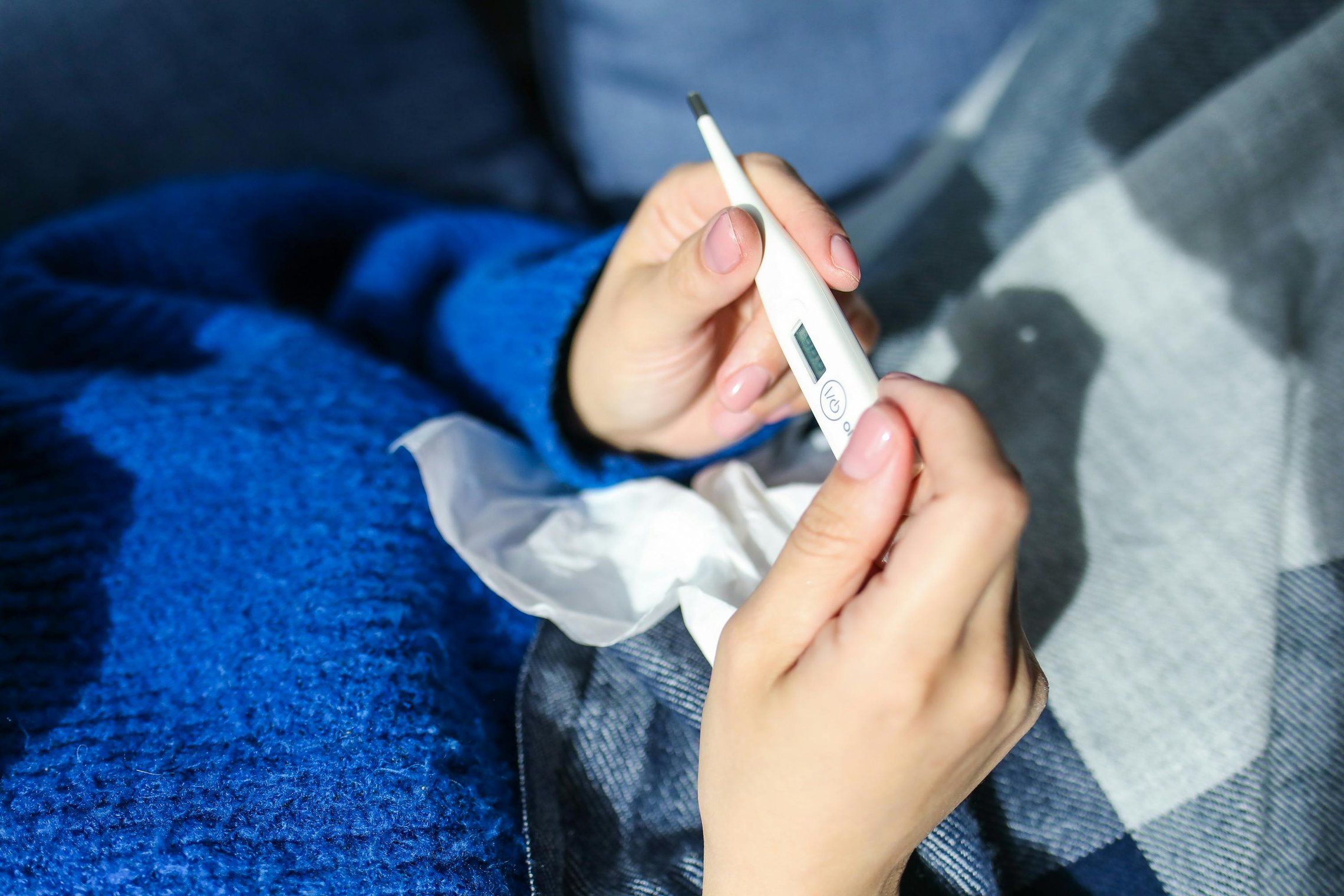
Influenza Cases Remain High: Prevention Is Key
According to the National Public Health Centre (NPHC) under the Ministry of Health, during 12–18 January (week 3 of the year) in Lithuania, the overall incidence of influenza, acute upper respiratory infections (AURI), and COVID-19 increased to 965.3 cases per 100,000 population. In week 2 (5–11 January), the rate was lower at 892.3 cases per 100,000. The number of influenza cases rose, while COVID-19 and AURI rates remained similar. The lowest incidence was reported in Panevėžys County, and the highest in Šiauliai County. Two Municipalities (Pagėgiai and Šiauliai city) reached epidemic levels, exceeding 1,500 cases per 100,000 population.
Intensifying Influenza Activity and Hygiene Recommendations
As influenza activity increases, it is especially important to follow hygiene measures carefully:
- Stay away from sources of pollution or infection outdoors (crowded streets, areas with smoke or noticeable odors). If this is not possible, remain indoors and monitor your health.
- Exercise in areas away from crowded or polluted locations, adjusting the duration according to your physical condition.
- Wear respiratory protection (medical masks or respirators) if spending prolonged time in polluted or high-risk areas due to work or other reasons.
- Use public transport whenever possible.
- Do not light fires or burn waste in gardens or suburban areas.
- Clean indoor spaces regularly using wet cleaning methods.
- Monitor your health; if you feel unwell, stay home, avoid gatherings, do not bring sick children to schools or childcare facilities, consult your physician, and follow their advice.
- Healthcare and social care institutions may implement stricter infection control measures, depending on available infrastructure and resources, including patient flow management, mandatory use of personal protective equipment, limits on visitor numbers or visiting times, and other restrictions.
Hospitalizations and Risk Groups
During week 3, 225 people were hospitalized with influenza and 22 with COVID-19 in Lithuania. Eleven patients required intensive care. NPHC specialists emphasize that the highest risk of complications and death from influenza and COVID-19 occurs among vulnerable groups, particularly people over 65 and those with underlying medical conditions.
Last week, 11 influenza-related deaths were reported (total this season: 29). Age distribution: 70–79 years (4), 80–89 years (4), 90+ years (3). All had chronic diseases; 9 were unvaccinated.
Two COVID-19-related deaths were reported (total this season: 33), both aged over 90, with chronic conditions, and unvaccinated.
Data on the incidence of influenza, AURI and COVID-19 in Counties.
nistracinės teritorijos (apskritys) | 49 (2025 m. gruodžio 1–7 d.) | 50 (2025 m. gruodžio 8–14 d.) | ||||||||
Gripo atvejų skaičius | ŪVKTI atvejų skaičius | COVID-19 ligos atvejų skaičius | Suminis (gripo, ŪVKTI ir COVID-19 ligos) atvejų skaičius | Suminis rodiklis (gripo, ŪVKTI ir COVID-19 ligos atvejų skaičius 100 tūkst. gyventojų) | Gripo atvejų skaičius | ŪVKTI atvejų skaičius | COVID-19 ligos atvejų skaičius | Suminis (gripo, ŪVKTI ir COVID-19 ligos) atvejų skaičius | Suminis rodiklis (gripo, ŪVKTI ir COVID-19 ligos atvejų skaičius 100 tūkst. gyventojų) | |
Alytaus | 188 | 1079 | 30 | 1297 | 975,8 | 740 | 1173 | 21 | 1934 | 1455,0 |
Kauno | 668 | 3696 | 109 | 4473 | 761,3 | 1834 | 4307 | 130 | 6271 | 1067,4 |
Klaipėdos | 235 | 1699 | 41 | 1975 | 574,4 | 571 | 1861 | 52 | 2484 | 722,4 |
Marijampolės | 169 | 771 | 36 | 976 | 731,9 | 516 | 829 | 29 | 1374 | 1030,3 |
Panevėžio | 254 | 782 | 30 | 1066 | 514,9 | 336 | 808 | 38 | 1182 | 571,0 |
Šiaulių | 140 | 1390 | 39 | 1569 | 588,2 | 281 | 1562 | 55 | 1898 | 711,6 |
Tauragės | 109 | 322 | 26 | 457 | 508,1 | 249 | 403 | 22 | 674 | 749,3 |
Telšių | 55 | 643 | 21 | 719 | 553,6 | 134 | 836 | 21 | 991 | 763,0 |
Utenos | 59 | 656 | 19 | 734 | 598,2 | 203 | 779 | 24 | 1006 | 819,9 |
Vilniaus | 3983 | 9131 | 182 | 13296 | 1516,5 | 7504 | 10501 | 202 | 18207 | 2076,7 |
Iš viso Lietuvoje | 5860 | 20169 | 533 | 26562 | 918,9 | 12368 | 23059 | 594 | 36021 | 1246,1 |
Situation in Europe
According to the European Centre for Disease Prevention and Control (ECDC) for week 2, the number of people seeking medical care for AURI is rising across EU/EEA countries.
COVID-19 incidence remains low in all age groups.
Influenza continues to spread rapidly. In some countries, the peak has likely passed. The dominant strain is A(H3N2), with A(H1N1)pdm09 also circulating among all age groups. Hospital admissions remain high, especially among those over 65.
Respiratory syncytial virus (RSV) activity is gradually increasing, though it is lower than in the same period over the past four seasons. In some countries, RSV-related hospitalizations, especially among children under 5, are increasing.
Last updated: 20-01-2026
Related news:
The Second Peak of Tick Activity Begins in Autumn
NPHC: Don’t forget about tetanus protection when working outdoors
Preserving Season Is in Full Swing: NPHC Warns of the Hidden Risk of Botulism
The Start of the School Year Is the Right Time to Check Your Child’s Vaccinations
On World Mosquito Day, NPHC Reminds Travellers to Protect Themselves Against Mosquito Bites